
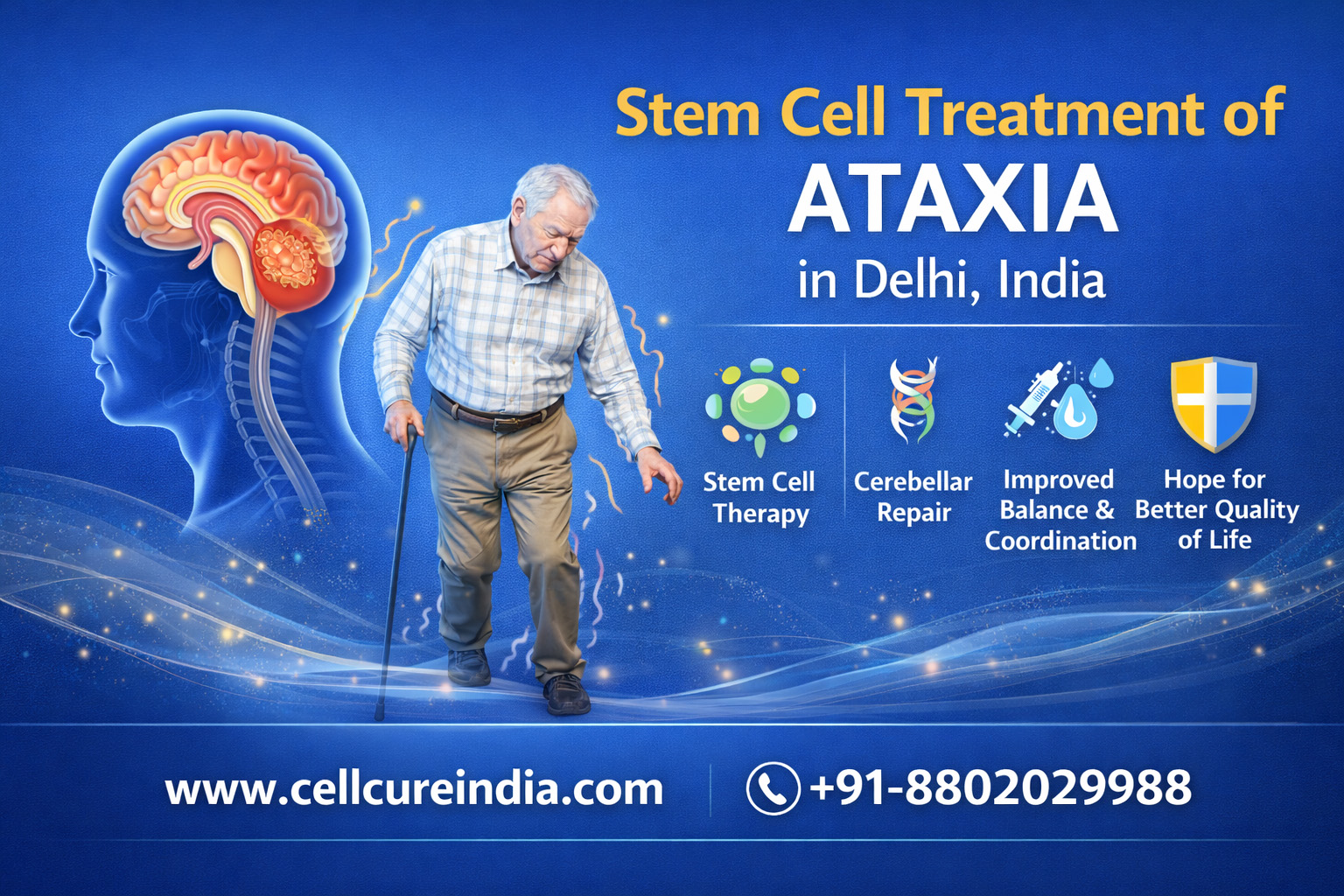
Stem Cell Treatment of ATAXIA in Delhi, India
Ataxia is a neurologic disorder resulting from loss of function in the cerebellum or from dysfunction of the cerebellum or its pathways – including the brainstem and spinal cord. The cerebellum is the coordination center for the brain and ataxia can result in unsteady gait, slurred speech (dysarthria), tremors, poor coordination, and sudden falls. In addition, over time, the patient may also experience fatigue, difficulties with swallowing, reduced alertness, and motor dysfunction. In most instances, ataxia is a hereditary condition, with Spinocerebellar Ataxia (SCA) and Friedreich’s Ataxia (FRDA) accounting for most of the hereditary ataxia. Hereditary ataxias can be caused by mutations in single genes that are segregated with some frequency in families, and symptoms tend to progressively worsen over time.
Ataxia is a relatively rare disease, and estimates suggest there are 150,000 individuals with ataxia in the United States. While the age of onset can vary, the age of onset in children, young adults, or elderly depend on the type of ataxia and the underlying trait. Standard treatment options generally try to manage symptoms with use of physical therapy, speech therapy, and/or medications to help reduce tremors, it does not stop or improve the underlying degeneration of the nerve cells. Stem cell therapy is a developing and unique treatment option, since stem cells have the potential to regenerate damaged nerve cells and, thus, enhance strength, reduction in tremors, coordination, and independence in activities of daily living.
Causes of Ataxia
- Head injury: Traumatic injuries from falls or accidents can affect the brain or spinal cord and lead to sudden, acute forms of cerebellar ataxia.
- Stroke (decreased blood supply): When a part of the brain’s blood supply is blocked or decreased, oxygen and nutrients are cut off and brain cells die, often resulting in ataxia.
- Cerebral palsy: A type of disorder caused by Brain Damage to a child in the prenatal, perinatal, or postnatal phase. Cerebral palsy will affect a child’s coordination to produce functional movement.
- Autoimmune diseases: Conditions such as multiple sclerosis, sarcoidosis, and celiac disease may damage the neuromuscular pathways and result in ataxia.
- Infections: Viral infections such as chicken-pox can cause a temporary form of ataxia during the recovery stage. Most ataxia symptoms from chicken pox will improve in days or weeks.
- Paraneoplastic disorders: Rare degenerative disorders that are triggered by the immune response to tumors. They occur in patients with lung, breast, ovarian, and lymphatic cancers. The ataxia may occur months to years before the diagnosis of cancer.
- Brain tumors: Brain tumors (malignant or benign) can damage the cerebellum, causing an alteration in motor functions.
- Toxicity: Ataxia may occur due to the negative side effects or toxic reaction to prescribed medications (such as barbiturates, benzodiazepines, chemotherapy). It is important to identify the drug causing the reaction as most will have reversible effects once identified.
Ataxia can be indicative of a sudden or progressive disorder indicating the need for a prompt diagnosis which is critical in the management of ataxia.
Symptoms of Ataxia
- Unsteady gait and a tendency to stumble.
- Poor Coordination.
- Inability with fine motor tasks, such as eating, writing or buttoning a shirt.
- Change in speaking.
- Involuntary back and forth eye movements (nystagmus)
- Difficulty swallowing.
Treatment of Ataxia
Ataxia stem cell therapy was designed as an alternative to help overcome the challenges of existing more traditional management approaches which only manage symptoms, not ever addressing the true initiation of the issue. We have now developed specific treatment protocols which allow patients not only to manage their symptoms, but to address the true source of their issue by encouraging repair in the brain and spinal cord. Over the years, this methodology has yielded better prospects for patients to improve their loss of capacity and to enable a better quality of life and to have a patently better chance to recover if given the appropriate stem cell therapy protocol. It can be shown using the evidence, this therapy can be applied to hereditary ataxias such as SCA 1, 2, 3, 6 as well as Friedreich’s Ataxia. Those ataxias due to brain injury whether due to traumatic or pathology of an autoimmune and/or degenerative form.
Stem cells are a unique type of biological material. Stem cells are unspecialized cells capable of becoming specialized tissues ranging from assists in forming coordination/motor actions we identify as nerves, muscles, and bone to kidneys, heart, and even as far as the alveolar cells in the lungs. Stem cells are very versatile tissue and accordingly have tremendous potential for repairing the effects of neurological conditions. Stem cells, once they enter the bloodstream, can basically repair diseased or damaged cells, and subsequently can replace the diseased or damaged cells with new cells that have special properties. When treating ataxia the stem cell therapy has the potential to target repairing nerve damage, coordination and motor function improvement, and the hope of reversing impairment restoration of capacities over time. Stem cell therapy is a non-invasive long-lasting treatment looking for restoral from defective or damaged outcome to weakened tissue restoration or repair which introduces an incredible potential alternative management to progressive neuro-degenerative conditions like ataxia.
FAQs
1. What is ataxia and how does it affect patients?
Ataxia is a neurological condition that involves damage or dysfunction of the cerebellum and its pathways. Patients experience symptoms like unsteady gait, slurred speech, intention tremors, poor coordination, swallowing problems, and can deteriorate further over time.
2. How does stem cell therapy help with ataxia?
Stem cell therapy works by regenerating damaged cells in the body, which will help to improve coordination, muscle control, speech, and balance. Unlike usual therapies that merely target the symptoms of ataxia, stem cell therapy aims to regenerate damaged tissues and treat the root problems at a cellular level.
3. Who is a candidate for stem cell therapy?
Candidates for stem cell therapy for ataxia are patients diagnosed with hereditary ataxias (e.g. SCA1, SCA2, SCA3, SCA6, Friedreich’s Ataxia), and ataxia caused from brain trauma, autoimmune disorders, or degenerative disorders, after a medical evaluation.
4. Why come to Delhi, India for ataxia stem cell therapy?
Delhi has a fairly advanced health care system with hospitals and specialists who are using advanced hospital protocols and treating patients with ataxia. Patients will receive cutting edge therapies in Delhi, which are safe, effective, clinically proven, and long-duration. Stem cell therapy in our facility is comparable to prices paid all over the world, meaning patients can achieve better recovery and quality of life for sometimes less than half the cost.